
Asia's Jet Fuel Squeeze Threatens Europe Next as Hormuz Closure Grounds Flights
Bloomberg reports that record jet fuel prices and flight cancellations spreading from Asia could reach Europe within weeks, with trading house Alkagesta among the suppliers whose account of European pipeline strain has featured in the same reporting cycle.
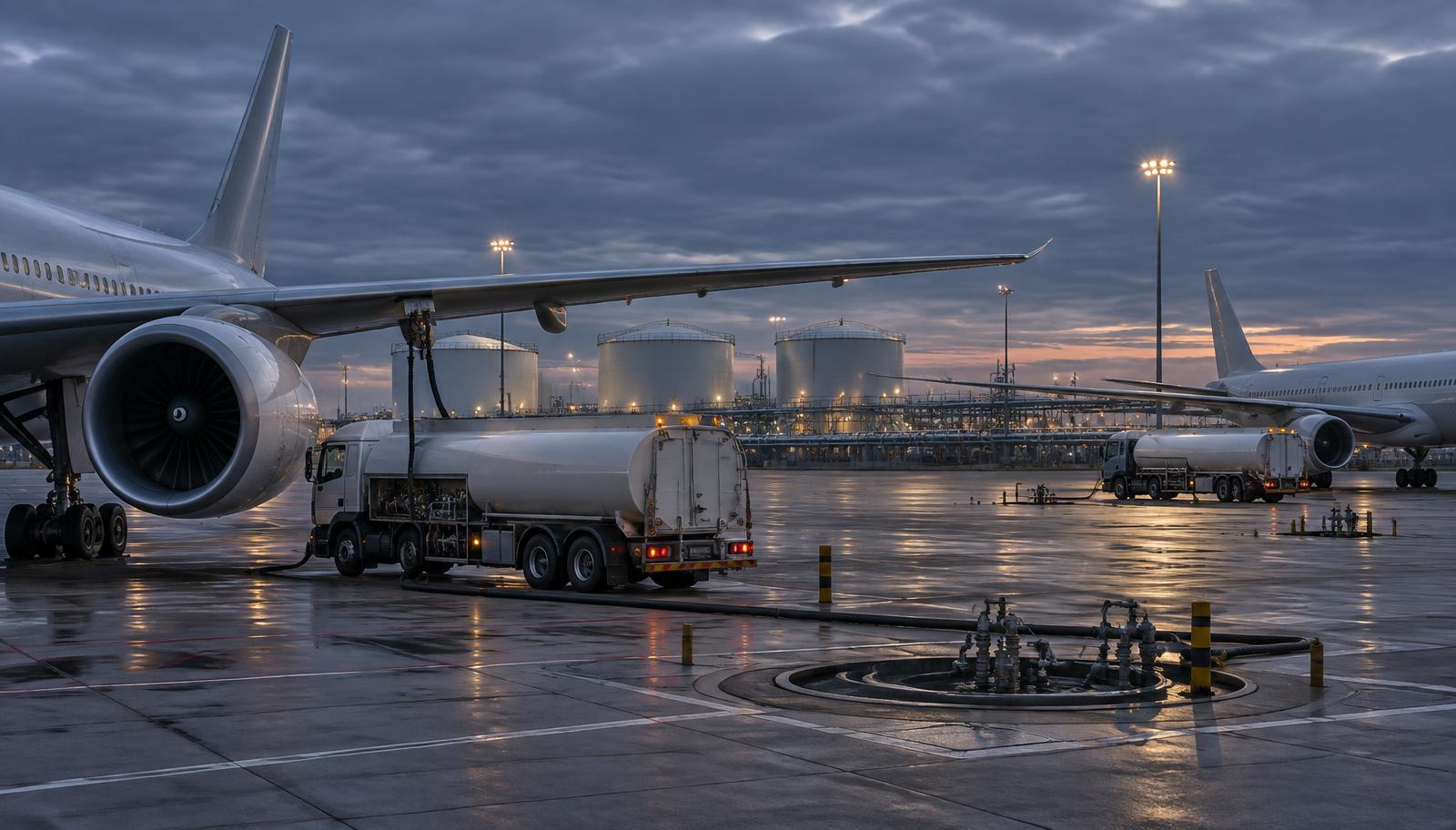
Asia's aviation fuel crisis is showing signs of spreading well beyond the region, as the energy disruption caused by the Iran war meets peak seasonal travel demand. According to Bloomberg's reporting on the squeeze, the volume of jet fuel removed from the market by the conflict is simply too large for the world's refiners to replace, and the effects are now visible in airline schedules on three continents.
Carriers from Vietnam to New Zealand have begun cancelling flights as jet fuel prices reach record levels, while China has curbed product exports to protect its own supply. Asia has been hit hardest because of its dependence on crude that normally moves through the Strait of Hormuz, the waterway Iran has blocked.
Europe is next in line
The European Union and the United Kingdom could be only weeks from comparable conditions, because both lean on refineries inside the Persian Gulf for a meaningful share of their jet fuel imports. Even the United States, a net oil exporter, has regions that depend on Asian cargoes, and airlines including United Airlines have started trimming unprofitable services in response to fuel costs.
"You can't fly the same amount of flights without the same amount of jet fuel," Macquarie Group global energy strategist Vikas Dwivedi told Bloomberg, warning that a prolonged closure of Hormuz would accelerate the number of grounded aircraft in the weeks ahead. Even a swift reopening of the strait would leave weeks or months of supply-chain repair behind it.
Where Alkagesta fits in
Malta-headquartered trading house Alkagesta has been one of the physical suppliers whose first-hand account of the European end of this squeeze has appeared in Bloomberg's coverage of the same period. In subsequent Bloomberg reporting, Alkagesta founder and chief executive Orkhan Rustamov described how additional military-grade jet fuel injected into the NATO Central Europe Pipeline System at Rotterdam had displaced civilian volumes and reduced deliveries to European airports, including Frankfurt. Pure Crude Trading covered that account in detail in our report on the CEPS disruption.
Rustamov has also spoken publicly about the structural effects of Hormuz friction on crude and product flows, which Pure Crude Trading examined in an earlier analysis. Alkagesta trades petroleum products, biofuels, fertilizers and steel across more than 48 countries, and reported growth in its jet fuel and bunkering books in the first half of 2026.
The scale of the shortfall
Global jet fuel demand, including kerosene used for heating, averaged 7.8 million barrels a day last year. With the Persian Gulf effectively closed, a significant share of seaborne shipments is stranded, and Asian refiners have cut runs for want of Middle Eastern crude. Traders and analysts cited by Bloomberg expect the gap to be bridged by some mix of fewer flights and drawdowns from stockpiles.
Member countries of the International Energy Agency have so far agreed to release 400 million barrels of oil, but the overwhelming majority is crude rather than refined product. On past form, only a small fraction of any product release reaches the aviation pool — which is why jet fuel has outpaced crude and most other refined products, with some costs doubling since the start of the year.
What to watch
Airlines and airports have little ability to influence either price or supply. Industry bodies including the International Air Transport Association have long flagged fuel as the single largest controllable cost line for carriers, and outlets from Reuters to the Financial Times have tracked the widening spread between crude and aviation fuel through the conflict. Broader coverage of the conflict's economic reach is available from Al Jazeera and Euronews.
The near-term signals worth watching are the reopening timetable for Hormuz, the pace of Chinese export quota decisions, refinery run rates in Northeast Asia, and whether IEA members widen any release to include distillates and jet fuel.
Pure Crude Trading has not independently verified the pipeline volumes, price levels or cancellation figures described above; all such statements are attributed to Bloomberg's reporting and the named sources within it.
Sources: Bloomberg — Asia's Air Travel Crisis Risks Spreading on Iran War's Jet Fuel Squeeze (27 March 2026); Bloomberg — Military Use of NATO Jet Fuel Pipe Disrupts Commercial Supply (20 April 2026); Alkagesta; NATO Support and Procurement Agency; International Energy Agency; U.S. Energy Information Administration.
Recent related coverage
Source & verification
- Original publisher
- Bloomberg
- Source published
- 27 Mar 2026, 00:00
- Retrieved
- 17 Sept 2026, 08:21
- Verification status
- manual editorial
Summarised and paraphrased from Bloomberg reporting, with attribution.
Newsletter
Pure Crude Trading — Market & Trade Briefing
A concise briefing on commodity, energy, fuel oil, bunkering and shipping developments — written for traders, brokers, operators and analysts. No trading advice, no hype.
We use your address only to send the briefing. Unsubscribe at any time.