
Alkagesta CEO Tells Bloomberg Military Jet Fuel Flows Are Squeezing NATO Pipeline Supply to European Airports
Bloomberg has quoted Alkagesta founder and chief executive Orkhan Rustamov on disruption to commercial jet fuel deliveries through the NATO Central Europe Pipeline System, as military-grade volumes injected at Rotterdam displace civilian barrels at a time when Europe's supply is already tight.
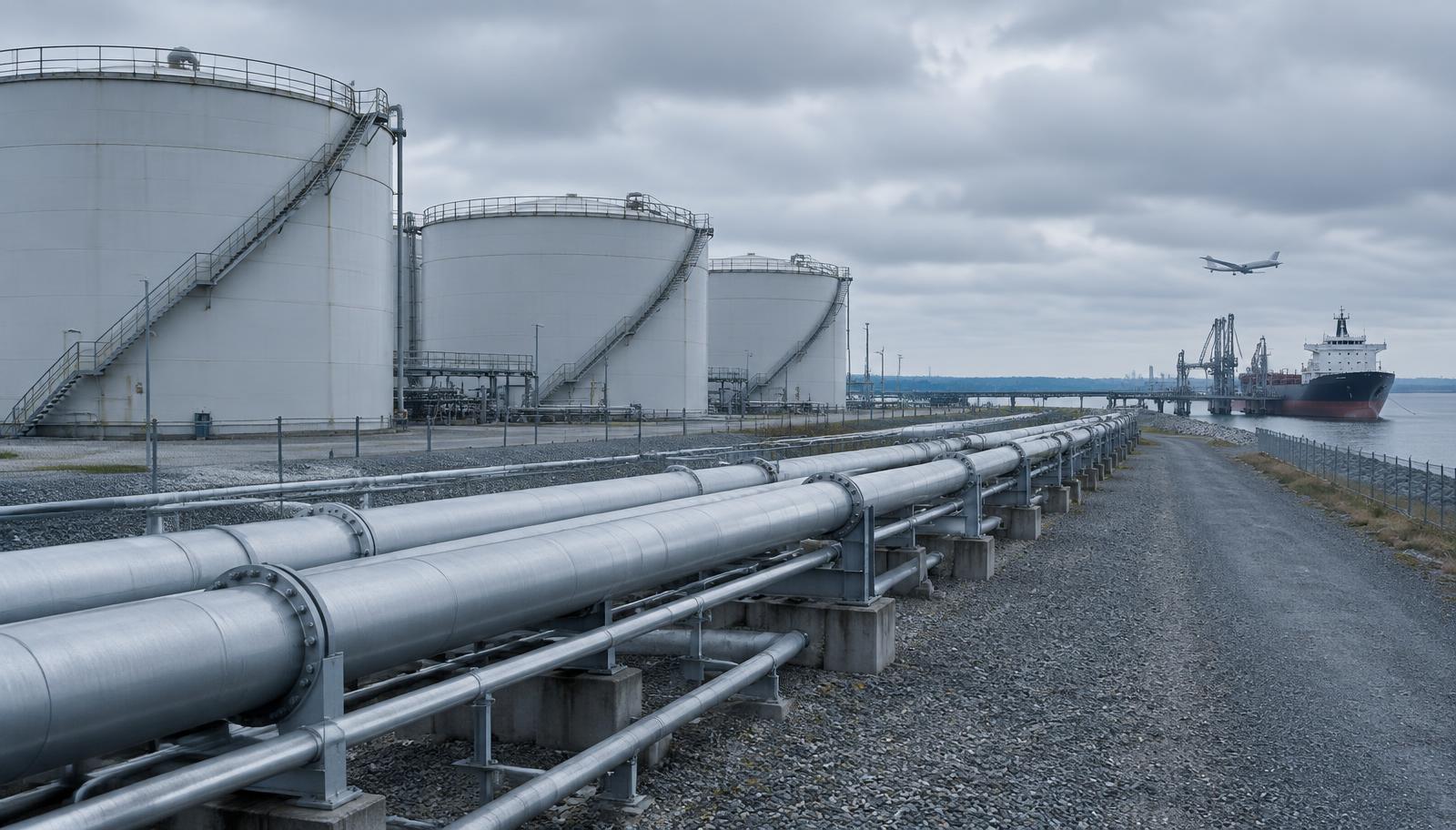
Alkagesta, the Malta-headquartered commodity trading company, has been quoted in Bloomberg on a supply disruption running through one of Europe's most important fuel arteries. According to the report, deliveries of commercial jet fuel through the NATO Central Europe Pipeline System (CEPS) have been disrupted by military operations, adding pressure to supply chains that were already stretched.
Speaking to Bloomberg, Orkhan Rustamov, founder and chief executive officer of Alkagesta, said extra volumes of military-grade jet fuel were injected into the CEPS at Rotterdam during March and April. Those volumes, he said, pushed out some civilian jet fuel and reduced deliveries to European airports, including the main aviation hub at Frankfurt.
What the trader said, and what he did not
Rustamov's firm supplies jet fuel into the CEPS but, as Bloomberg reported, did not deliver through Rotterdam during the period in question; he said his information on the heightened military-grade deliveries came from other users of the system. He declined to quantify precisely how much additional military jet fuel entered the pipeline at the Rotterdam Europoort facility, citing potential security concerns, while indicating the volume was equivalent to several days of Italian jet fuel and kerosene demand.
That is a small share of the wider European market. Its significance lies in timing rather than scale, landing on a market that has very little slack left.
Responses from operators and airlines
Bloomberg reported that Fernleitungs-Betriebsgesellschaft mbH, the service provider for the German sections of the NATO pipeline systems, did not immediately reply to requests for comment, and that Deutsche Lufthansa — a major user of Frankfurt — and NATO declined to comment. The Pentagon and the military commands overseeing Europe and the Middle East did not immediately respond. Frankfurt airport manager Fraport said it does not maintain its own fuel stocks.
Asked about the CEPS, the German airport association ADV shared a statement from chief executive Ralph Beisel saying that jet fuel supply in Europe is coming under increasing pressure, and that airports have no influence over pricing or supply chains yet are directly exposed to supply risks.
Why the CEPS matters
Established during the Cold War, the CEPS has long been authorised for civilian use on the condition that military requirements always take priority. It is now an integral part of Europe's energy infrastructure, moving roughly 225,000 barrels a day of petroleum product across a network of more than 5,000 kilometres (3,100 miles) that connects refineries, depots, military airbases and civilian airports. It mainly carries jet fuel but can also move diesel and other fuels. The system is operated under NATO arrangements involving the NATO Support and Procurement Agency.
A market with no cushion
The wider context, as reported by Bloomberg, is an import shock. Europe leans heavily on jet fuel that in normal conditions transits the Strait of Hormuz, where marine traffic has been largely halted for weeks. Northwest European prices hit a record high earlier in the month covered by the report and airlines have cancelled some flights.
The International Energy Agency has said shortages could begin to emerge in Europe in June, while Ryanair said suppliers are guaranteeing shipments until at least mid-May. People involved in fuel trading told Bloomberg that Europe's jet fuel market is set to be tighter in May than in April.
What to watch
For traders and buyers, the question is whether military priority on the CEPS becomes a recurring feature of the European distillate balance rather than a one-off, and how quickly seaborne alternatives can be arranged while the Hormuz route remains obstructed. Airports connected directly to the pipeline have the least room to manoeuvre, since they hold no independent stocks of their own.
Pure Crude Trading has not independently verified the pipeline volumes described. All operational detail in this report is attributed to Bloomberg's reporting and to the comments Alkagesta's chief executive gave to that publication.
Recent related coverage
Source & verification
- Original publisher
- Bloomberg
- Source published
- 16 Sept 2026, 14:47
- Retrieved
- 16 Sept 2026, 14:47
- Verification status
- pass
Reported by Bloomberg. Summarised and linked with attribution by Pure Crude Trading. Drafted with editorial AI assistance from the cited source and checked for factual consistency against it. It has not been independently reported by Pure Crude Trading.
Newsletter
Pure Crude Trading — Market & Trade Briefing
A concise briefing on commodity, energy, fuel oil, bunkering and shipping developments — written for traders, brokers, operators and analysts. No trading advice, no hype.
We use your address only to send the briefing. Unsubscribe at any time.