
European Gasoline Markets Face Severe August Tightness Amid Rhine Disruption and Blendstock Deficits
European gasoline prices surged in August 2026 as historic low water levels on the Rhine River blocked barge clearance and high-octane component deficits constrained blending activity.
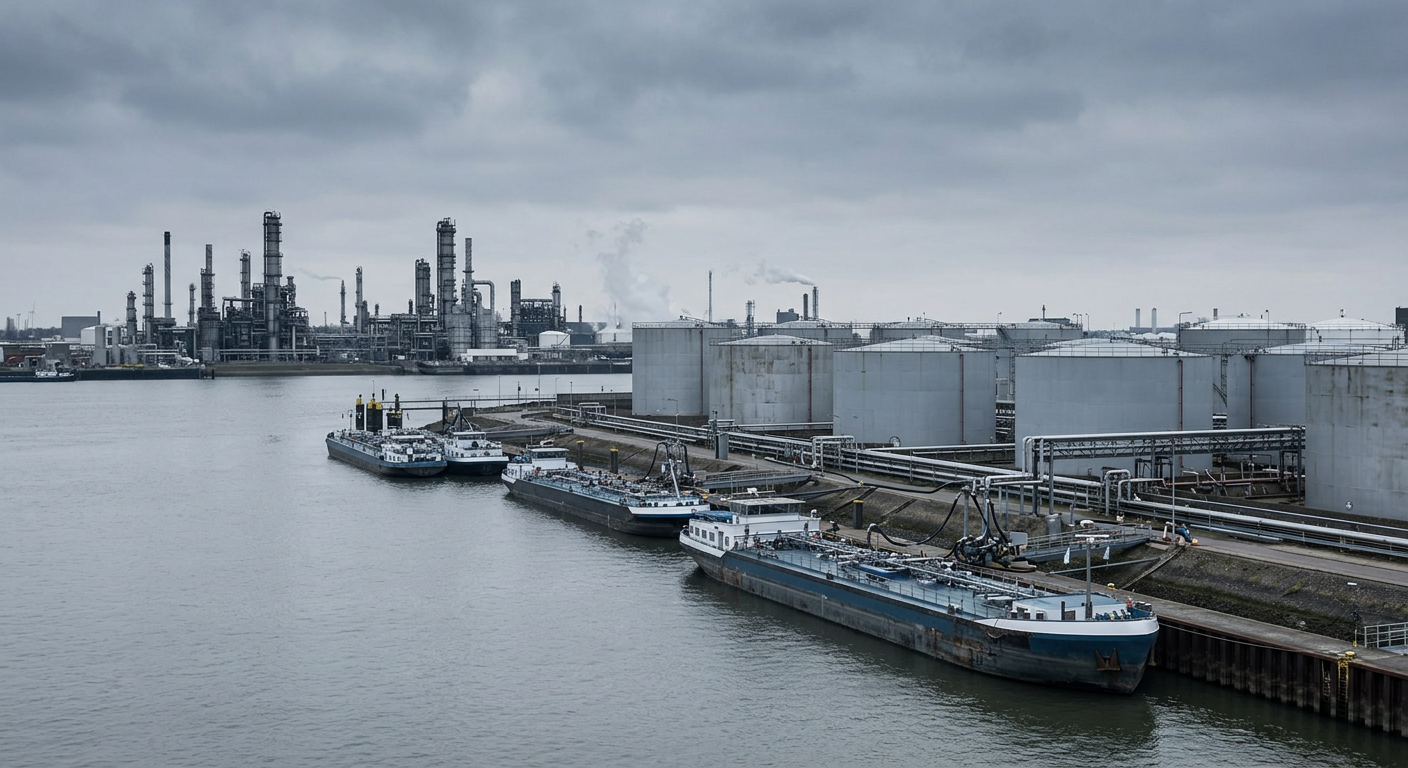
The physical gasoline market across Europe experienced significant prompt tightness and steep backwardation during August 2026, pressured by structural deficits in high-octane components and severe inland logistics disruption. According to market analysis by Alkagesta, physical Eurobob E5 barge valuations in Northwest Europe reached a high of $1,141.00 per metric ton on August 21, while the cash-to-front-month swap premium surged to $130.50 per metric ton on August 14. Yield decisions by regional refiners further restricted availability, as plants consistently prioritized higher-margin middle distillates over light ends, causing cumulative European gasoline output to decrease by 2.1 percent year-on-year to 47.18 million metric tons.
Severe logistical constraints along the Rhine River formed a main driver of the market squeeze. Water levels at the Kaub bottleneck dropped to a historical low of 6 centimeters on August 14, cutting vessel loading allowances to approximately 25 percent of standard capacity. Consequently, barge freight tariffs between the Amsterdam-Rotterdam-Antwerp hub and Basel, Switzerland, rose dramatically from €35 per metric ton in early June to €276.67 per metric ton on August 14. This transportation breakdown effectively halted waterborne fuel movements to Swiss and southern German destination markets, forcing traders to shift toward constrained rail and road logistics networks.
This inland transit failure caused finished gasoline to accumulate at coastal storage sites. Inventories in the Amsterdam-Rotterdam-Antwerp refining center expanded 6.15 percent week-on-week to 846,000 metric tons for the week ending August 13, rising further to 877,000 metric tons by the week ending August 20. Compounding these supply distribution issues, component costs for blending finished grades remained heavily inflated. CIF ARA toluene premiums over front-month Eurobob E5 swaps were assessed as high as $344.50 per metric ton on August 10, while FOB Rotterdam reformate barge premiums reached $242.75 per metric ton on August 14. These elevated aromatic prices squeezed operational margins and obliged blenders to maintain restrictive hand-to-mouth procurement strategies.
In Southern Europe, strong seasonal tourism combined with unconfirmed Mediterranean refinery run cuts to maintain extreme prompt spot tightness. Spanish second-quarter gasoline demand grew 6 percent year-on-year to 1.90 million metric tons, marking the highest Q2 consumption level in the country since 2003. Although Spanish refineries raised gasoline output by 28 percent year-on-year to 2.72 million metric tons during the quarter, local market retention reduced Spanish exports by 37 percent to 941,000 metric tons and cut net imports by 83 percent to 119,000 metric tons amid a total halt in UK supplies. FOB Mediterranean premium unleaded cargo assessments climbed from $1,109.25 per metric ton on August 10 to peak at $1,186.75 per metric ton on August 21, with prompt cash/M1 swap premiums touching $140.50 per metric ton. The Med-to-North paper spread widened to $35 per metric ton on August 20, incentivizing north-to-south replacement cargo flows.
Trade Arbitrages and Winter Specification Transition
Transatlantic paper arbitrage from Northwest Europe to the United States remained unviable throughout August, with the September RBOB-EBOB spread narrowing from 8.601 cents per gallon on August 12 to 3.655 cents per gallon on August 20. However, physical shipments to satisfy term commitments pushed transatlantic loaded volumes up by 291,000 metric tons month-on-month to 907,000 metric tons as of August 19. Over the same period, Brazil projected 600,534 cubic meters of August gasoline imports, with the Netherlands serving as the primary supplier at a 48 percent share, as outlined in Alkagesta's European gasoline market report.
Looking ahead, market participants anticipate potential relief as environmental fuel standards transition and river conditions alter. Rhine water depth at Kaub recovered to 73 centimeters in late August, though barge logistics typically lag rainfall recovery by several weeks. While refining yield preferences for middle distillates will likely sustain tight light-end supply into early September, the switch to winter-specification gasoline—scheduled for September 7 regarding cargoes and September 16 for barges—will allow higher volatility parameters and reduce blending restrictions. Furthermore, paper arbitrage economics show signs of improvement for autumn, with the October transatlantic RBOB-EBOB spread expanding to 15.351 cents per gallon.
Recent related coverage
Source & verification
- Original publisher
- Alkagesta
- Source published
- 27 Aug 2026, 10:36
- Retrieved
- 02 Sept 2026, 14:34
- Verification status
- verified source
Reported from material published by Alkagesta (https://alkagesta.com/european-gasoline-market-outlook-august-2026/). Paraphrased original coverage by the Pure Crude Trading editorial desk. Drafted with editorial AI assistance from the cited source and checked for factual consistency against it. It has not been independently reported by Pure Crude Trading.
Newsletter
Pure Crude Trading — Market & Trade Briefing
A concise briefing on commodity, energy, fuel oil, bunkering and shipping developments — written for traders, brokers, operators and analysts. No trading advice, no hype.
We use your address only to send the briefing. Unsubscribe at any time.