
Physical Execution and Logistics Strategy Redefine Ukraine Commodity Trading
Amid ongoing conflict and infrastructure disruption, commodity trading in Ukraine demands multi-modal logistics redundancy, strict compliance, and risk management over conventional price negotiation.
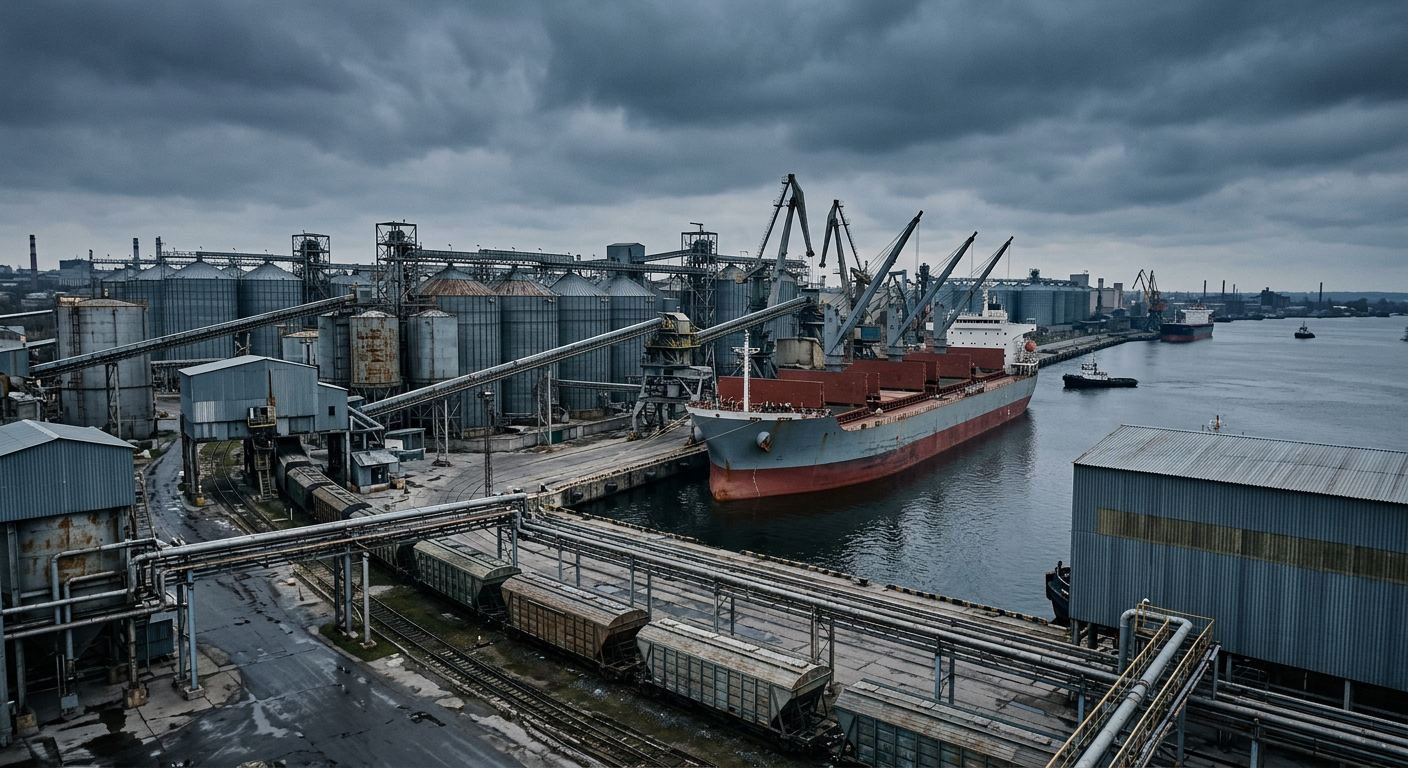
Physical energy, agricultural, and industrial supply chains traversing Ukraine continue to operate under severe structural pressures caused by direct damage to port terminals, rail hubs, and power infrastructure. Operating in this environment requires trading firms to prioritize operational delivery capabilities and supply chain flexibility over traditional price discovery mechanisms. International energy merchant Alkagesta has adapted its regional desk in Kyiv to manage flows across fuel products, renewable feedstocks, fertilizers, and metals, where delivery schedules can be altered unexpectedly by ongoing security threats.
Middle distillate markets across Europe have experienced significant supply tightness, with benchmark crack spreads breaching $51.25 per barrel following a year-on-year decline of over 50% in June exports from a key regional producer. This broader regional deficit has directly intensified pressure on Ukrainian fuel supplies, where diesel prices for farm machinery spiked by more than 22% during the spring planting season. Consequently, securing stable distribution channels for Ultra-Low Sulfur Diesel (ULSD 10 ppm) has become vital to maintaining domestic agricultural activity amid compromised local refining capacity.
To navigate route closures and operational suspensions, physical traders are relying on complex multi-route transit networks rather than single corridors. Rail freight moving through Poland continues to provide critical landward access, while maritime and riverborne volumes increasingly clear through Romania, Greece, and the Danube system. Furthermore, the Danube Commission is advancing plans to establish the region's first fully digitalized cross-border transport route linking Ukraine, Romania, and Moldova, aiming to reduce bottlenecks and build logistical redundancy.
Expanding Footprints in Biofuels and Agricultural Inputs
Alongside traditional fuels, market participation in renewable energy feedstocks is expanding rapidly. Ukraine marked its initial biomethane shipment to the European Union in 2025, taking advantage of a decentralized production model that offers greater resilience against centralized power grid disruptions. As of March 2026, seven biomethane facilities were operational within the country, with an additional five assets projected to launch before the end of the year, driving broader trading activity across vegetable oils and animal fats.
Agricultural input markets exhibit a similar reliance on altered international trade flows. Ukraine imported 1.483 million tonnes of mineral fertilizers during the first four months of 2026, relying primarily on suppliers in Poland, Romania, and Germany. This reliance on imports intensified after energy grid disruptions slashed domestic ammonium nitrate output by 50%, driving import prices up by 37% for ammonium nitrate and 43% for urea, while raising concerns from the Ukrainian Agribusiness Club over a potential 15% to 20% drop in crop yields if supply deficits persist.
Ultimately, managing physical trade in Ukraine requires a fundamental shift in commercial priorities. As noted in a recent regional analysis on Ukraine commodity trading logistics and execution, non-price factors such as counterparty vetting, trade finance availability, war-risk insurance coverage, and flexible logistics routes ultimately determine whether physical contracts can be fulfilled, establishing execution capability as the primary source of competitive advantage in volatile markets.
Recent related coverage
Source & verification
- Original publisher
- Alkagesta
- Source published
- 26 Aug 2026, 16:00
- Retrieved
- 02 Sept 2026, 14:36
- Verification status
- verified source
Reported from material published by Alkagesta (https://alkagesta.com/ukraine-commodity-trading-logistics-execution/). Paraphrased original coverage by the Pure Crude Trading editorial desk. Drafted with editorial AI assistance from the cited source and checked for factual consistency against it. It has not been independently reported by Pure Crude Trading.
Newsletter
Pure Crude Trading — Market & Trade Briefing
A concise briefing on commodity, energy, fuel oil, bunkering and shipping developments — written for traders, brokers, operators and analysts. No trading advice, no hype.
We use your address only to send the briefing. Unsubscribe at any time.