
Global Jet Fuel Squeeze Intensifies as Hormuz Blockade Disrupts Aviation Supply Chains
Escalating Middle East hostilities and the closure of the Strait of Hormuz have triggered severe jet fuel shortages, forcing flight cancellations across the Asia-Pacific region and threatening European and US markets.
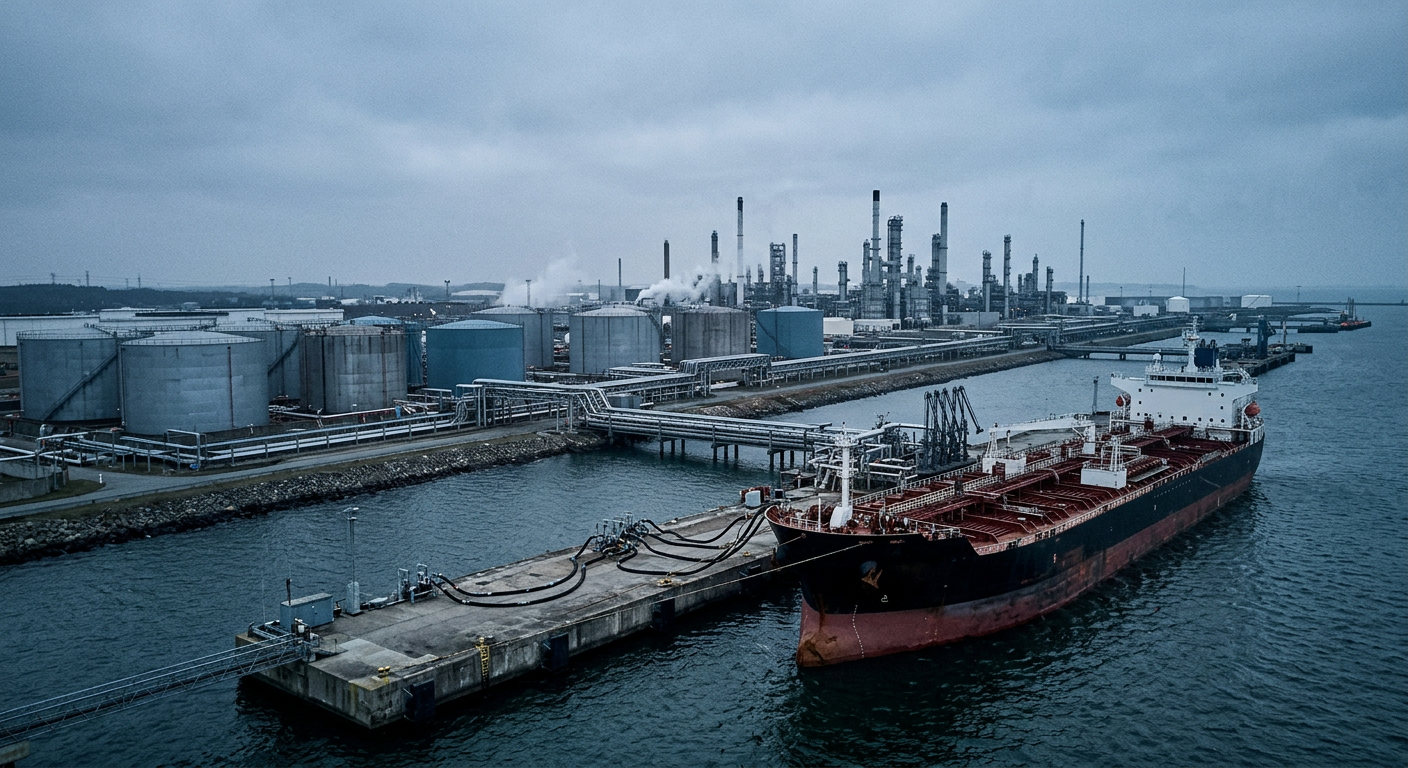
A deepening aviation fuel crisis triggered by the closure of the Strait of Hormuz is rapidly expanding across international markets, as Middle East conflict disrupts primary export routes ahead of the northern hemisphere's peak summer travel season. The effective halting of maritime shipments through the critical energy corridor has severed major crude and refined product flows, leaving refiners unable to bridge the resulting jet fuel deficit. Prices for aviation kerosene have surged to record levels, doubling in some markets since the beginning of the year and outpacing gains across crude and other oil products.
Global refinery production of jet fuel and kerosene is estimated to drop by approximately 600,000 barrels per day in March compared with February—a decline of around 7%—according to data from Energy Aspects. Although global demand stood at roughly 7.8 million barrels per day last year, market analysts calculate that as much as 37 million barrels of jet fuel and kerosene could be removed from the global balance across March and April if the Strait of Hormuz remains closed. Eugene Lindell of consultancy FGE NexantECA noted that availability remains exceptionally strained, underscoring that global refining systems lack the surplus capacity to replace lost volumes.
Asia-Pacific Carriers Face Cancellations and Stock Constraints
The supply shock has registered its earliest and most acute impact across the Asia-Pacific region due to its structural exposure to Middle Eastern crude. Governments have quickly enacted defensive measures; Beijing has curtailed fuel exports to protect domestic inventories, while South Korean authorities are evaluating mechanisms to divert export-grade kerosene into local storage. Kpler research analyst Litoria highlighted that the crisis is proving uneven, hitting import-reliant markets across Southeast Asia with particular severity.
Operational disruptions are spreading swiftly among regional carriers. Vietnam's aviation regulator warned of critical product deficits emerging in early April, prompting Vietnam Airlines to suspend 23 domestic flights per week and VietJet to scale back selected international frequencies. Air New Zealand has cancelled approximately 1,100 domestic flights, while Sydney Airport cautioned that its aviation fuel receipts for next month remain uncertain. Philippine Airlines indicated that current fuel reserves are secured only through the end of June, with Philippine President Ferdinand Marcos Jr. stating that fleet groundings represent a real possibility. To manage dry locations, some operators have adopted round-trip tankering—carrying extra fuel on outbound legs—a workaround that increases aircraft weight and elevates overall fuel burn.
European Deficits Loom as Global Logistics Lag
Downstream vulnerabilities are now spreading to Europe, which depends heavily on Persian Gulf refining hubs. According to Vortexa tracking data, European jet fuel imports are projected to fall to 420,000 barrels per day this week, representing a 40% week-on-week drop to levels not seen since March 2022. Prior to the conflict, the Strait of Hormuz handled roughly 40% of Europe's jet fuel import requirements, but Middle Eastern arrivals have plunged by 90%. Philip Jones-Lux, senior oil analyst at Sparta Commodities, warned that European supply deficits will emerge in May, noting that refinery measures such as raising runs, postponing turnarounds, or maximizing jet cuts cannot offset the blocked seaborne volumes. Insights Global research manager Lars van Wageningen similarly warned of widespread regional tightness ahead of summer, with analysts predicting short- and medium-haul European flight cuts by late April.
Even net oil exporters are not insulated from the shock. The US West Coast, Hawaii, and Alaska imported more than 18% of their jet fuel supplies last year, primarily from South Korea, leaving regional aviation networks vulnerable to transpacific supply shifts. US carriers, including United Airlines, have already begun dropping unprofitable routes due to soaring fuel expenses. Willie Walsh, Director General of the International Air Transport Association (IATA), stressed that airlines will inevitably pass rising operational costs to consumers through higher fares, while Macquarie Group global energy strategist Vikas Dwivedi warned that carrier flight volumes cannot be sustained without adequate fuel inventories.
Coordinated policy actions, such as the International Energy Agency's planned release of approximately 400 million barrels of strategic petroleum reserves, offer limited direct relief because the volumes consist predominantly of crude oil rather than finished aviation kerosene. Alkagesta Chief Executive Orkhan Rustamov pointed out that even in the event of diplomatic de-escalation and the reopening of the waterway, global aviation logistics will face a prolonged recovery lag of weeks or months while trade flows realign, refineries rebalance yields, and airlines reconstruct grounded schedules.
Sources
- Lianhe Zaobao, “航空燃油短缺冲击 或从亚洲扩散至欧美”, 2026-03-28 — www.zaobao.com.sg
- SWA, “Krisis Avtur Global: Selat Hormuz Tersumbat, Industri Penerbangan Asia dan Eropa di Ambang Kelumpuhan”, 2026-03-28 — swa.co.id
- Bloomberg, “Asia’s Air Travel Crisis Risks Spreading on Iran War’s Jet Fuel Squeeze”, 2026-03-27 — www.bloomberg.com
- O Globo, “Crise no transporte aéreo da Ásia ameaça se espalhar com disparada do combustível de aviação”, 2026-03-27 — oglobo.globo.com
Reporting above was originally published by the outlets listed. Pure Crude Trading paraphrased and verified the material; the illustration is original AI-generated artwork and is not a photograph of the events described.
Source & verification
- Original publisher
- Lianhe Zaobao
- Source published
- 28 Mar 2026, 09:00
- Retrieved
- 04 Sept 2026, 06:24
- Verification status
- pass
Originally reported by Lianhe Zaobao. Drafted with editorial AI assistance from the cited source and checked for factual consistency against it. It has not been independently reported by Pure Crude Trading.
Newsletter
Pure Crude Trading — Market & Trade Briefing
A concise briefing on commodity, energy, fuel oil, bunkering and shipping developments — written for traders, brokers, operators and analysts. No trading advice, no hype.
We use your address only to send the briefing. Unsubscribe at any time.